.png)
Exploring the History of Label Applicator Machines- Part #1
- PrintMach
- Sep 19, 2025
- 2 min read

From Hand-Pasted Labels to Smart High-Speed Systems
Label applicator machines are so embedded in packaging systems today that we rarely ask where they came from. Here’s the real story; how they evolved from gummed labels to servo-driven, vision-guided smart machines.
1800s- Early 1900s: Labels Before Machines
Early product labels were hand-applied: workers moistened gummed labels, or tied paper tags to bottles and boxes.
This was slow and inconsistent, and became a production bottleneck as factories scaled.

First Step Toward Automation: Addressograph (1896)
Invented by Joseph Smith Duncan, this machine imprinted addresses from metal plates for mass mailings.
While not a label applicator in the modern sense, it pioneered the concept of automating repetitive labelling actions.
1930s: The Invention of Self-Adhesive Labels
The Game-Changer: R. Stanton Avery
In 1935, Avery invented pressure-sensitive (self-adhesive) labels- adhesive on one side + a release liner.
He built an early die-cutting and label dispensing setup using spare parts, which laid the foundation for modern label applicators.

He founded Avery Dennison to commercialise these labels.
This created both a new kind of label and a reason to invent machines to apply them. This was the turning point: labels were no longer glued or moistened. Machines would now have to peel them from a liner, align them precisely, and apply them at speed.
1950s- 1960s: The First True Applicator Machines
As industrial bottling boomed, machine builders began creating dedicated label applicators. Here’s a few key ones:
Krones & Jagenberg (Germany)
Built early semi-automatic wet-glue machines (1952) and later fully automatic rotary wet-glue labellers (~1956).
Wet-glue machines cut paper labels from magazines, applied glue, and wrapped them- ideal for beer and beverages.


Cavagnino & Gatti (Italy)
Founded 1955 to serve small wineries.
In 1961 launched the CG 61/D, among the first inline automatic labellers applying multiple labels (e.g. front & back) per bottle.
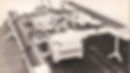
CG 61/D
KOYO Machinery (Japan)
Founded 1967.
In 1968 launched the LS-80 hopper labeler with a vacuum suction pickup system- a major breakthrough for reliably picking and placing paper labels at speed.

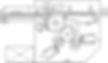
Photo & Diagram Above: A double hopper labeler developed by KOYO soon after, doubled the label pasting capability by installing 2 pairs of label hoppers and suction drums and enabling to transfer to the pasting drums alternately
Weber Packaging Solutions (USA)
Began in 1932 and by the 1950s offered in-plant label printing and dispensing systems.
Early pioneer of print-and-dispense applicators for logistics and warehousing.